
Food Drive with Harvesters
From December 1-12, 2025 drop off food and household donations at any of our Kansas City, Kansas Public Library locations as we work to fill the shelves of local food pantry partners with Harvesters.

Main Library
625 Minnesota Avenue
Kansas City, KS 66101
United States
Mr. & Mrs. F. L. Schlagle Library
4051 West Dr
Kansas City, KS 66109
United States
Also open 9:00 am-5:00 pm on the 3rd Saturday of each month.
South Branch Library
3104 Strong Avenue
Kansas City, KS 66106
United States
Turner Community Library
831 S 55th Street
Kansas City, KS 66106
United States
West Wyandotte Library
1737 N 82nd Street
Kansas City, KS 66112
United States
United States
Serving locations throughout the KCK metro and Wyandotte County.
From December 1-12, 2025 drop off food and household donations at any of our Kansas City, Kansas Public Library locations as we work to fill the shelves of local food pantry partners with Harvesters.

Turmeric (Curcuma longa), a relative of ginger, is a popular cooking spice in Asian cuisine since antiquity. It is also a very potent anti-inflammatory herb.

One in eight Americans struggle with food scarcity, yet, up to 40% of the food that’s produced in the U.S. is wasted.

Eggs have been colored and decorated for various spring and Easter rituals since pre-Christian times. The eggs represent the symbol of rebirth and fertility. These traditions survive to this day in many nations around the world.

These beet juice-colored eggs make a great appetizer, an attractive Easter table centerpiece, and also a fun family craft project. They work for Valentine’s Day as well.
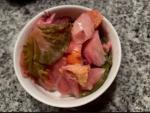
Fermenting food is not a human invention; rather, it was a natural phenomenon that humans observed and learned how to cultivate.
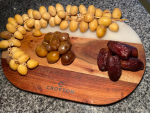
Throughout history, dried dates have been popular as a snack in the winter when fresh fruits were not available. Now, they are popular year-round and are used in healthy desserts and energy bars.
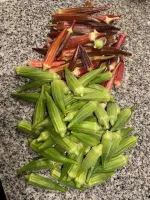
Some recipes recommend trimming off okra’s stem ends, others suggest peeling off tough skin from the conical caps only, and others suggest slicing the pods crosswise. It is all a matter of preference.
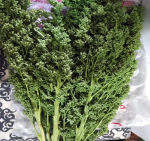
Los huazontles son una planta mexicana que fue consumida por los Aztecas en tiempos prehispánicos.
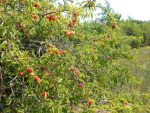
Prunus angustifolia, or Sandhill plum, is native to much of Kansas. It is the most common wild plum in western Kansas. They are found thriving on sandy prairies, where they are very effective in stopping blowing sand.