
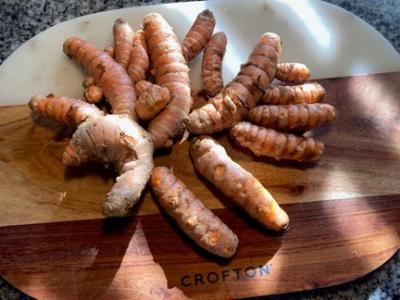
Turmeric (Curcuma longa), a relative of ginger, is a popular cooking spice in Asian cuisine since antiquity. It is also a very potent anti-inflammatory herb. It has been used in Ayurveda, the traditional Indian medical system as well as Chinese medicine for over 4,000 years. It is identified as has having “pungent” properties. More than 700 medical studies concluded that turmeric may help protect against Alzheimer’s disease and several types of cancer, and has many other health benefits.
Care is required when cooking with turmeric because the bright yellow-orange color can stain kitchen countertops and clothing. Turmeric is often used in curries, rice and lentil dishes because it harmonizes well with other spices and herbs. Green shoots are eaten as vegetables and leaves can be used as a natural food wrap. It is also used in pickles and relishes as a preservative. Turmeric is a popular dye for cloth and food, for example in American mustard and cheese.
The Western world has discovered turmeric only in the last decade, but already has acknowledged it as one of the “superfoods." Turmeric Golden Milk is the new hipster coffee. And yes, it is delicious!
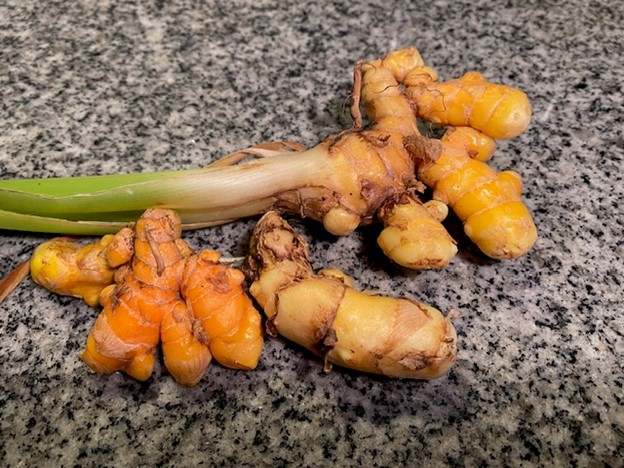
Fresh turmeric can be grown in our climate right in your backyard, or purchased in late summer at local farmers’ markets and Asian grocery stores. Fresh rhizomes should be firm and plump. Turmeric is dried and stored to make it available all year long in cooking recipes and tea making.
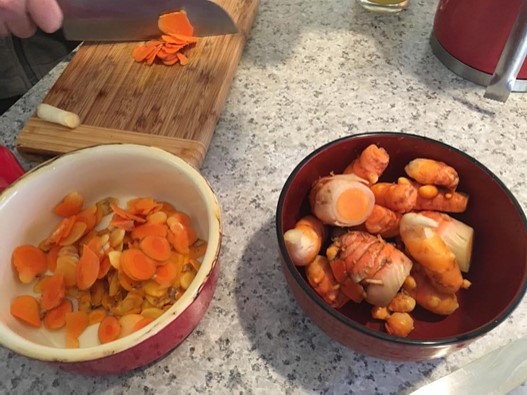
Turmeric is stored dried. To dry it cut into thin slices, chop or grate.
.
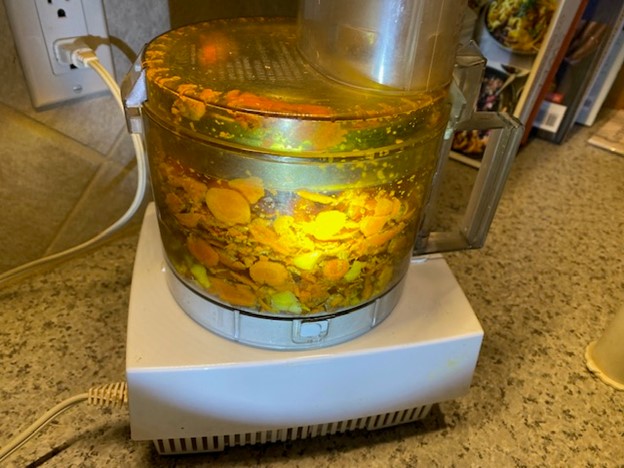
Make the process of cutting much faster, you can use a food processor.
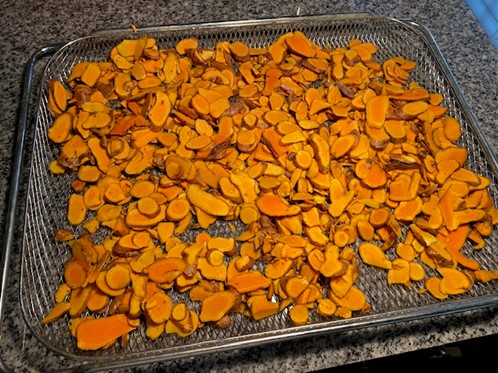
Spread turmeric into a thin layer on a drying rack
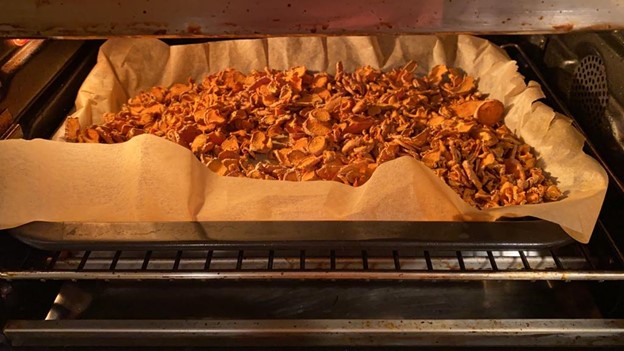
Dry in the oven on the lowest setting, around 200F for several hours, or until dry.
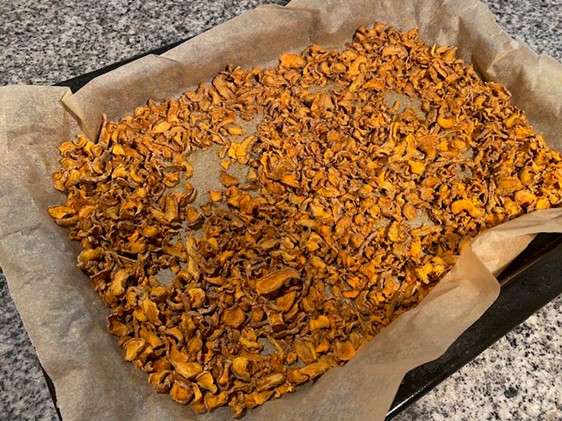
Make sure the slices are dried completely to prevent mold that would ruin the whole batch.
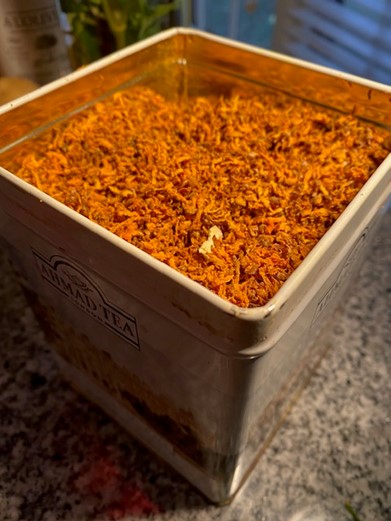
Store turmeric in a dry place, away from sunlight and heat. Stored in a tight container it will keep fresh for couple of years.
Golden Milk Tea
Ingredients:
5 c water
3 T dried turmeric root
Pinch of black pepper
Pinch or knob of fresh ginger (optional)
Almond or coconut milk
Honey or maple syrup
Pinch of cinnamon or cardamom for garnish (optional)
Note: Adding black pepper and a drop of olive oil enhances the absorption of the active ingredient, curcumin.
Instructions:
Combine ingredients in a saucepan and simmer over a gentle heat, Once hot, strain and pour into cups, add sweetener of choice and sprinkle with cinnamon or cardamom and enjoy.
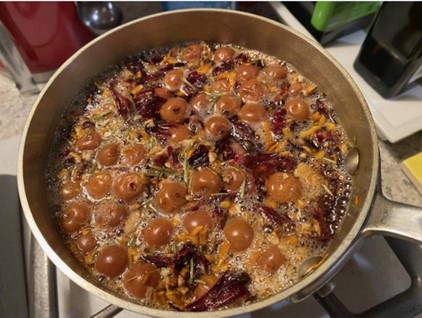
Turmeric’s flavor pairs well with other herbal teas. This one contains sour cherries, ginger, hibiscus flowers, orange peel and rosemary. When the tea cools, lemon juice is added.
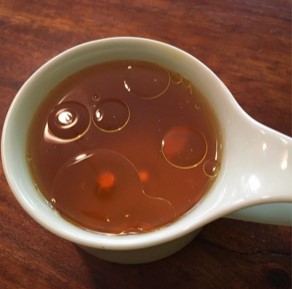
You can also make this tea using just water. It still tastes delicious!
Share with your friends!
Sources
Magda Born
mborn@kckpl.org
Community Services Librarian
913-295-8250 ext 1103
Herbs & spices
by Norman, Jill, 1940- King, Dave (Photographer),
Format: Book
Call Number: 641.6383 NORMAN
Publication Date: 2015
Healing herbs of paradise
"In Healing Herbs of Paradise, Dr. Sears explains in detail the healing benefits and properties of the Bali's tropical plants, fruits, and herbs. He states, "Every chapter will introduce the reader to one of Bali's many herbs. Some will be familiar-with unfamiliar uses. Others will be strange and new. Many have remarkable properties that Western science is only now discovering? centuries after Bali's healers understood their use." This beautiful coffee table book is full of striking photography and previously unknown knowledge about the curative and anti-aging qualities found in the exotic herbs and plants of Bali."--Amazon.com
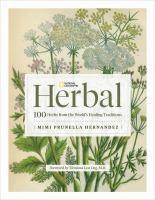
Herbal : 100 herbs from the world's healing traditions
Targeted to the millions of consumers treating common ailments with herbal remedies, this authoritative guide to 100 essential herbs is chock-full of crucial information for the health-minded consumer, wellness advocate, gardener, and naturalist.
Written by the executive director of the American Herbalists Guild, National Geographic Herbal features backyard weeds like dandelion and red clover, culinary herbs like rosemary and garlic, classics like blueberries and chamomile, as well as less familiar medicinals like ashwangandha, Japanese knotweed, and shatavari. You'll discover the healing properties of herbs and spices like turmeric and ginger, and which learn which popular herbs deserve special conservation attention, such as rooibos and ginseng.
Blending traditional lore and current science, the information found in these pages stretches from tips for the kitchen garden and home apothecary to news about activism in the global arena. Illustrated with vintage botanical drawings and vivid contemporary photography, it highlights hallowed traditions, from ancient Chinese and Ayurvedic principles to the Latin American curanderismo lineage and Gullah Geechee practices in the American South.
Comprehensive and user-friendly, this beautiful book will help readers make sense of the ever-growing selection of herbal remedies on the market-and enhance their health through a deeper knowledge of the wonder of plants.