
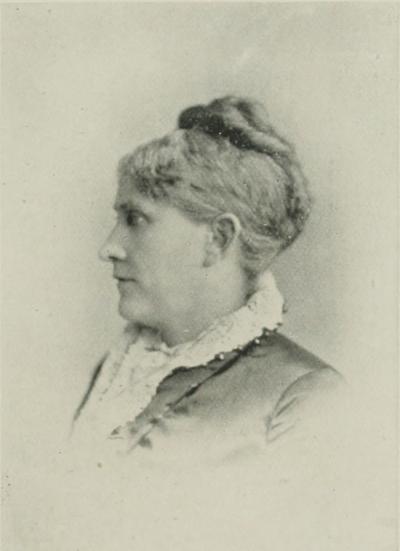
Mary Tenney Gray was a philanthropist, writer, and suffragist known as the “Mother of the Women’s Club Movement of Kansas.” Born in Pennsylvania, she moved to Kansas in 1859 when her husband became Probate Judge of Wyandotte County. At the Wyandotte Constitutional Convention, Gray worked with suffragist Clarina Nichols to advocate for women’s equal rights and access to education in the new state constitution. She later helped unite women’s clubs across Kansas to expand educational opportunities and advance women’s roles in public life. Gray died in 1904 and is buried in Oak Grove Cemetery.
Check out more amazing women from Kansas history during Women's History Month by visiting the Kansas Room at Main Library!
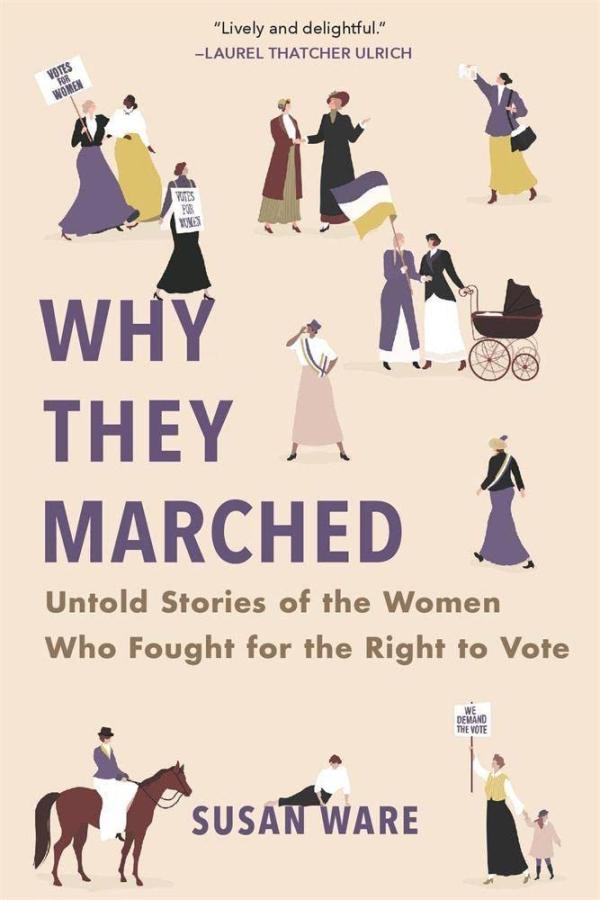
Why They Marched
Looking beyond the national leadership of the suffrage movement, an acclaimed historian gives voice to the thousands of women from different backgrounds, races, and religions whose local passion and protest resounded throughout the land. For far too long, the history of how American women won the right to vote has been told as the tale of a few iconic leaders, all white and native-born. But Susan Ware uncovered a much broader and more diverse story waiting to be told. Why They Marched is a tribute to the many women who worked tirelessly in communities across the nation, out of the spotlight, protesting, petitioning, and insisting on their right to full citizenship. Ware tells her story through the lives of nineteen activists, most of whom have long been overlooked. We meet Mary Church Terrell, a multilingual African American woman; Rose Schneiderman, a labor activist building coalitions on New York’ s Lower East Side; Claiborne Catlin, who toured the Massachusetts countryside on horseback to drum up support for the cause; Mary Johnston, an aristocratic novelist bucking the Southern ruling elite; Emmeline W. Wells, a Mormon woman in a polygamous marriage determined to make her voice heard; and others who helped harness a groundswell of popular support. We also see the many places where the suffrage movement unfolded— in church parlors, meeting rooms, and the halls of Congress, but also on college campuses and even at the top of Mount Rainier. Few corners of the United States were untouched by suffrage activism. Ware’ s deeply moving stories provide a fresh account of one of the most significant moments of political mobilization in American history. The dramatic, often joyous experiences of these women resonate powerfully today, as a new generation of young women demands to be heard.
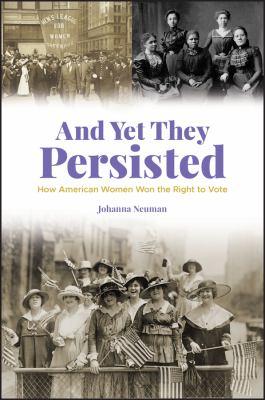
And Yet They Persisted
And Yet They Persisted traces agitation for the vote over two centuries, from the revolutionary era to the civil rights era, excavating one of the greatest struggles for social change in this country and restoring African American women and other women of color to its telling. Author Johanna Neuman demonstrates that American women defeated the male patriarchy only after they convinced men that it was in their interests to share political power. Reintegrating the long struggle for women's suffrage into the metanarrative of U.S. history, Dr. Neuman sheds new light on such questions as why it took so long to achieve equal voting rights for women, how victories in state suffrage campaigns pressured Congress to act, why African American women had to fight again for their rights in 1965, and how the struggle by eight generations of female activists finally succeeded.